How to Read a Casino Scene in a Film
Learn how to read a casino scene in a film by tracking sound, framing and reactions, and see how those choices shape the story’s meaning of risk.
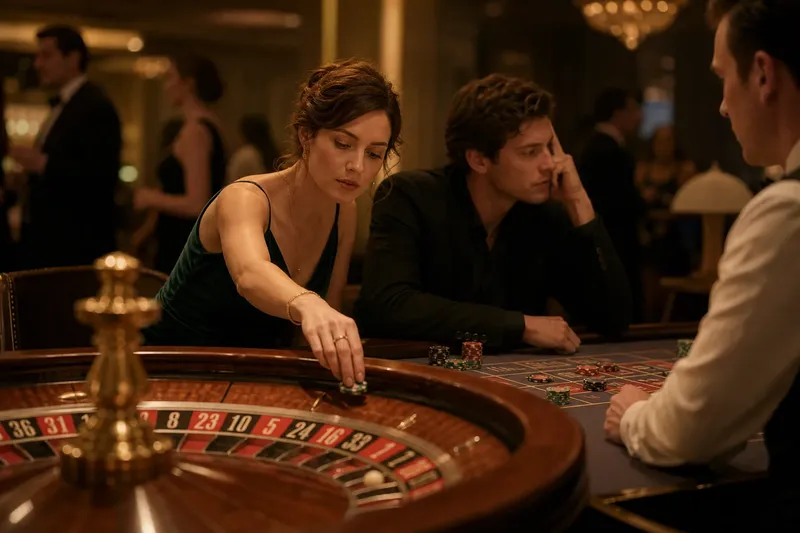
To read a casino scene in a film, start with the sound that catches your attention before deciding what the characters’ choices mean. A roulette ball can sound like a clock, a dealer’s call can cut through a private conversation, and a sudden hush can make an ordinary pause feel dangerous. A short viewing routine gives each part of the scene its own task, so the soundtrack, camera and reactions do not blur into one impression.
Choose a scene and record your first impression
Pick a self-contained stretch: a character arrives at a table, places a bet, watches the result and responds. It need not feature a large win or dramatic loss. A quiet exchange across a gaming table may reveal more about a film’s idea of risk than a montage of flashing lights.
On the first viewing, watch without pausing. Afterwards, write down the immediate story you think the scene tells. Is someone trying to impress another person, conceal fear, buy time or prove control? Keep the note brief; it records your first response, not a verdict on the character.
Mark the moment your attention shifted. Perhaps a chip clicked against the table, another character looked away, or the camera showed a hand gripping a glass. That moment gives you a useful point of comparison on later viewings.
Choose a passage short enough to replay without turning the exercise into a film marathon.
Use the first day to follow the sound
Replay the passage with the audio leading your attention. Listen for what belongs to the casino setting, what is emphasised in the mix and what is absent. A slot-machine chime or a dealer announcing a result can establish place. A chip clatter raised above the surrounding room can make a small action seem consequential. Muted background noise can isolate a character even while the room remains crowded.
Ask when music begins and stops. Does it swell before the outcome, or only after a character reacts? Does a beat coincide with a bet, making the action feel deliberate, or arrive afterwards, suggesting that the character is catching up with events? Bright music over a tense face might make the scene feel ironic rather than triumphant.
Sound is not a neutral report of the room. A film mixes it to guide attention, so distinguish what could plausibly be heard in the casino from what the audience is meant to feel.
Use the second day to track the camera
Watch again with the sound low or muted, if the dialogue remains legible enough to be useful. Track who gets a close-up, who stays at the edge of the frame and what the camera shows between a wager and its result.
A close view of a hand placing a chip can turn a decision into the scene’s central event. A wide shot may instead make the player look small within the room, surrounded by other tables and watchers. An over-the-shoulder view can place you beside a character, while a view from across the table can make you feel like an opponent, spectator or judge.
Notice the editing as well as individual shots. If the film cuts from the player’s face to the wheel and back, it may make the outcome seem tied to that person’s will. If it cuts to a companion watching, the real stake may be their relationship. Ask what information the camera withholds, and for how long.
Use the third day to read reactions around the bet
Casino stories often make risk visible through behaviour rather than explanation. Watch the player, but do not stop there. Notice the dealer, companions and nearby strangers. A composed dealer can make a player’s agitation more exposed. A friend who smiles too quickly may appear to be protecting the player—or protecting their own interest.
Look at the timing of each response. Does a character react before the result is clear, or wait for someone else to speak? Does a losing player laugh, go still or immediately make another decision? These gestures have no fixed meaning. A smile might signal confidence, embarrassment or an attempt to reassure someone; surrounding details help you decide which reading is plausible.
Imagine a film scene in which Mara begins with one chip on a roulette number while her brother watches. The wheel turns, and he looks away before the ball settles. First note the visible action; then note the interpretation it invites: their relationship may matter more than Mara’s prediction. If the scene later shows him asking her to stop, that exchange would strengthen the reading; if he celebrates the result with her, it might complicate it.
Write down one visible reaction and the interpretation it invites, keeping the two separate.
Use the fourth day to identify the story’s risk
Risk in a casino film may refer to money, but it can also stand for reputation, belonging, loyalty or the desire to feel in control. Identify what the character stands to lose in the story, then ask whether the scene shows that stake or merely borrows the visual shorthand of gambling.
Consider the difference between a character choosing to wager and being swept along. Does the film show deliberation—an exchanged glance, a hesitation, a changed bet—or present the decision as an impulsive flourish? Is the character’s confidence supported by what the scene shows, or does the camera make it look like bravado?
Separate chance from character, too. A win does not, by itself, prove that someone is clever, deserving or unusually perceptive. If the film treats luck as evidence of personal mastery, notice whether the scene endorses that fantasy or undercuts it.
Use the fifth day to compare the scene’s signals
Return to your first impression and compare it with your notes on sound, framing and reactions. Do the elements point in the same direction? A triumphant score, a low-angle shot and admiring looks may frame a wager as a performance of power. Celebratory sound over a lonely wide shot might instead suggest that an apparent victory has left the character isolated.
When the signals conflict, do not force them into one explanation. The disagreement may be the scene’s point. A character can appear composed to companions while the soundtrack exposes strain; a close-up can invite sympathy even as another character’s reaction raises doubts about trust.
Write one sentence linking a formal choice to a story effect: “The camera stays on the companion during the bet, so approval feels more important than the result.” A precise sentence is more useful than calling the sequence simply exciting or tense.
Use the sixth day to test one interpretation
Give this viewing a distinct task: choose the interpretation that seems strongest in your notes and look for evidence that might challenge it. Replay the same passage, pausing only after it ends. Note one detail that supports your reading and one that could weaken it. A companion’s anxious expression might support the idea that loyalty is at stake; a later relaxed exchange could suggest that the tension came from the music rather than the relationship.
Then revise your sentence if needed. “The scene makes approval feel more important than the result” is more careful than claiming that the character is certainly seeking approval. The aim is not to settle every ambiguity, but to say what the film makes plausible and what remains uncertain.
Use the seventh day to answer common viewing questions
Why does a casino scene use so many close-ups?
Close-ups can give small gestures the weight of major decisions: a hand releasing a chip, eyes following a wheel or a jaw tightening. They also restrict what the viewer knows, creating tension by delaying the wider context.
What does casino sound add to a film scene?
Room noise establishes a public setting, while the mix can bring a particular voice, machine or chip sound forward. Music and silence then shape whether the same action feels suspenseful, celebratory, embarrassing or uneasy.
How can I tell whether a character is bluffing or genuinely confident?
A scene may not offer a definitive answer, and ambiguity can be intentional. Compare the character’s words with their timing, posture and the reactions of others, then ask whether later events support or unsettle your first impression.
Does a winning bet mean the character made the right decision?
Not necessarily: an outcome and the reasoning behind a choice are different things. Notice whether the film treats the result as luck, skill or wishful thinking, and whether another character challenges that interpretation.
Carry a short routine into another casino scene
The week’s sequence can become a compact method for other casino scenes: watch once without pausing, replay for sound, replay for framing, follow the reactions, identify the story’s stake, compare the signals, then test your strongest interpretation. Each pass should answer a different question rather than repeat the same viewing.
- Check whether the scene contains a clear decision and response; if it does, use it for the routine, but if not, choose a passage with a visible turning point.
- Check your first-impression note against the scene; if it names a motive, keep it as a starting hypothesis, but if it only describes the plot, add what you think the character wants.
- Check which sound is emphasised and when; if it changes the mood or directs attention, record that effect, but if no sound stands out, note how the ordinary room noise shapes the setting.
- Check who receives close-ups and what the cuts delay; if the camera centres a face or gesture, ask what it makes important, but if the framing stays wide, consider how the room affects the character.
- Check one reaction from someone other than the player; if it changes your reading of the wager, include that relationship, but if it does not, keep the focus on the player’s visible choice.
- Check the story’s stated or implied stake; if it is more than money, name that personal risk, but if the scene offers no clear stake beyond the wager, avoid assigning one without evidence.
- Check whether your interpretation has a counter-detail; if one appears, qualify your claim, but if none is visible, describe the reading as plausible rather than certain.
Reading a casino scene in a film becomes clearer when sound, framing and reaction are treated as storytelling rather than decoration around the game. The next time a wager feels momentous, notice whose face the film shows while the result is still unknown; that choice may reveal what the character is really risking.