The Hot Table Story and Why Each Roulette Spin Is Independent
Roulette spin independence explains why a run of red or black does not make the opposite colour due, helping you read hot-table claims without mistaking history for a forecast.
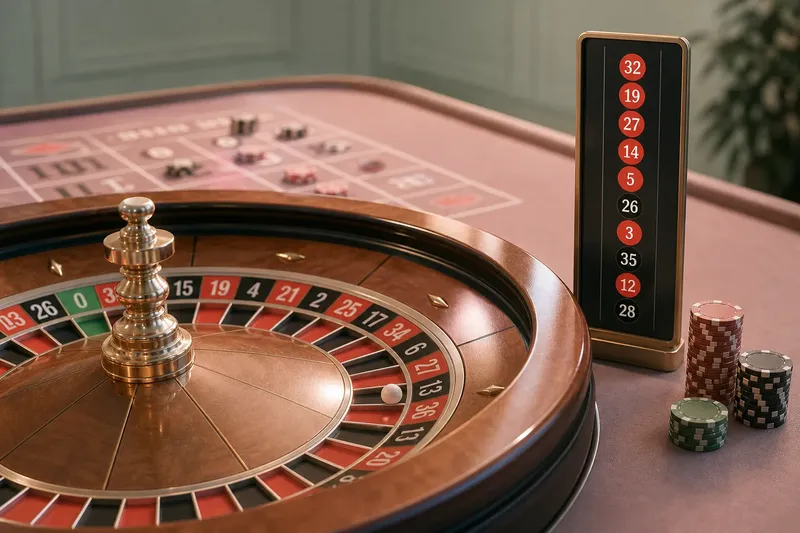
Roulette spin independence means that a run of red does not make black more likely on the next spin. A results board can make a streak vivid, but it records settled outcomes; it does not alter the wheel’s next movement.
A streak describes the record, not the next result
On a standard single-zero roulette wheel, pockets run from 0 to 36. Eighteen are red, eighteen are black, and zero is green. Once the ball settles, that spin is complete. The next spin is a separate event, not a continuation that must correct the colour just seen.
Players call a table “hot” when a colour or number has appeared repeatedly. As a description of recent results, the phrase is harmless. It becomes a prediction when someone says the run is likely to continue, or that the opposite colour is due. The sequence alone supports neither claim.
Random outcomes can form clusters without following a plan. A run of red may look conspicuous, but a striking pattern is not, by itself, evidence that the next spin has different odds.
What roulette spin independence means for colour bets
In the standard probability model, independent events are ones where knowing the result of one does not change the probability assigned to another. On a normally operating single-zero wheel, red has 18 pockets among 37, and black has the same count; green zero belongs to neither colour. Those proportions describe each spin, not a short-session quota.
So a sequence of reds does not create a debt that black must repay. Nor does one result make the next red more likely. The wheel does not keep a ledger of colours to balance on the following spin.
The type of wheel matters when describing its outcomes. A double-zero wheel has an additional green pocket, so its colour probabilities differ from those of a single-zero wheel. In either format, the previous result is not a forecast of the next one under the usual model.
Why hot-table stories are persuasive
A run is easy to notice and remember. The ordinary sequences that did not stand out are less likely to become a story, while a string of the same colour invites an explanation. One player may say the table is running red; another may argue that black must arrive to restore balance. Both turn a record into a prediction.
Imagine you arrive and see several reds on the display. You place a small stake on black because you think the run is due to end. If the next spin lands on red, that shows only that the sequence continued; if it lands on black, that single result still does not establish a forecasting rule. Either way, the display was a history, not evidence about the next pocket.
What can a roulette results board tell you?
Does black become more likely after several reds?
No. On a normally operating wheel, a completed run does not change the probability assigned to black on the next spin. It changes the board’s record, not the next spin’s odds.
Does a streak prove that a wheel is biased?
No. A streak can occur under the standard model, and a short display offers only a limited view of play. Establishing a physical irregularity would require reliable evidence about the wheel and its operation, not an eye-catching sequence alone.
Can a results board predict the next pocket?
It can show the recent sequence and help you follow what has happened. It does not make a pocket more likely or reveal a dependable prediction merely by displaying past outcomes.
Why does a colour feel overdue?
People often expect a short sequence of random events to look balanced. When one colour repeats, that expectation can make the other seem due, although no such correction is required on the next spin.
Long-run proportions do not promise short-run balance
Across a large collection of independent spins, the overall proportions may come to resemble the wheel’s underlying probabilities more closely. That is an aggregate tendency, not a rule requiring every short session to look representative. A short run can lean heavily towards one colour without contradicting the model.
As more spins are added to a record, an earlier streak may form a smaller share of the whole. That change in proportion does not mean later outcomes were supplied to repair the run; they are simply additional results.
Independence has limits as a description
Independence describes the usual probability model for a properly operating game. It is not a claim that physical equipment can never be irregular. But noticing a streak is not enough to establish a fault, and questions about a wheel’s condition or operation belong with the casino operator and relevant oversight.
Independence also says nothing about whether a particular player will win or lose over a session. A staking system can change how much someone risks after a win or loss, but it does not change the pocket probabilities of a properly random spin.
Keep the record separate from the decision
Use a results board as a record, not as a reason to chase a colour or number. If you choose to play, set a spending limit beforehand and do not raise a stake to recover losses or follow a result that feels overdue. If gambling becomes difficult to control, pause and seek support from an appropriate local service.
Roulette spin independence offers a useful distinction: the board shows the sequence so far, while the next spin supplies a separate result. A hot-table story can make that sequence memorable, but it cannot turn past outcomes into a reliable forecast.